Artificial Respirator
Home – Products
Artificial Respirator

- M.B
Ventilator: Importance and Uses in Hospitals
A ventilator is one of the most important medical devices used in hospitals and intensive care units. It plays a vital role in assisting patients who have difficulty breathing or are unable to obtain sufficient oxygen naturally.
A ventilator supports the breathing process by delivering air and oxygen to the lungs and removing carbon dioxide, according to settings determined and monitored by the medical team based on the patient’s condition.
What Is a Ventilator?
A ventilator is a medical device designed to assist patients with breathing when the lungs are unable to provide the body with enough oxygen or remove sufficient amounts of carbon dioxide.
The device can be used for short or extended periods, depending on the patient’s medical condition. In some cases, it may be connected to the patient through a breathing mask, while in more advanced cases, it may be connected through a breathing tube inserted into the trachea.
Importance of Ventilators in Hospitals
The importance of ventilators is particularly evident in intensive care units, emergency departments, and operating rooms, where some patients may require continuous or temporary respiratory support.
Some of their main functions include:
- Assisting patients who suffer from respiratory failure or impaired respiratory function.
- Supporting breathing during certain surgical procedures under general anesthesia.
- Helping maintain appropriate oxygen levels in the blood.
- Helping remove carbon dioxide from the body.
- Providing respiratory support to patients with certain lung diseases or critical conditions.
- Monitoring various respiratory parameters and adjusting respiratory support according to the patient’s condition.
When Does a Patient Need a Ventilator?
Not every patient experiencing breathing difficulties requires mechanical ventilation. The decision to use a ventilator is made by the physician and medical team based on an assessment of the patient’s condition, test results, respiratory parameters, and oxygen levels.
A ventilator may be used in situations such as:
1. Respiratory Failure
When the lungs are unable to provide sufficient oxygen or remove enough carbon dioxide, the patient may require respiratory support using a ventilator.
2. During Surgical Procedures
Ventilators can be used during general anesthesia to help the patient breathe throughout the procedure, according to the settings determined by the anesthesiologist.
3. Critical Conditions
Ventilators are widely used in intensive care units for patients who require continuous respiratory support due to serious medical conditions.
4. Certain Lung Diseases
Some patients with severe lung diseases may require respiratory support for a specific period, depending on the physician’s assessment.
How Does a Ventilator Work?
A ventilator delivers a mixture of air and oxygen to the patient according to a specific breathing pattern and set of ventilation parameters.
The medical team can control several settings, including:
- The volume of air delivered to the patient.
- Respiratory rate.
- Airway pressure.
- The oxygen concentration in the inspired air.
- The timing of inhalation and exhalation.
- The ventilation mode appropriate for the patient’s condition.
The appropriate settings vary from one patient to another. Therefore, the device should be operated and adjusted by trained medical professionals.
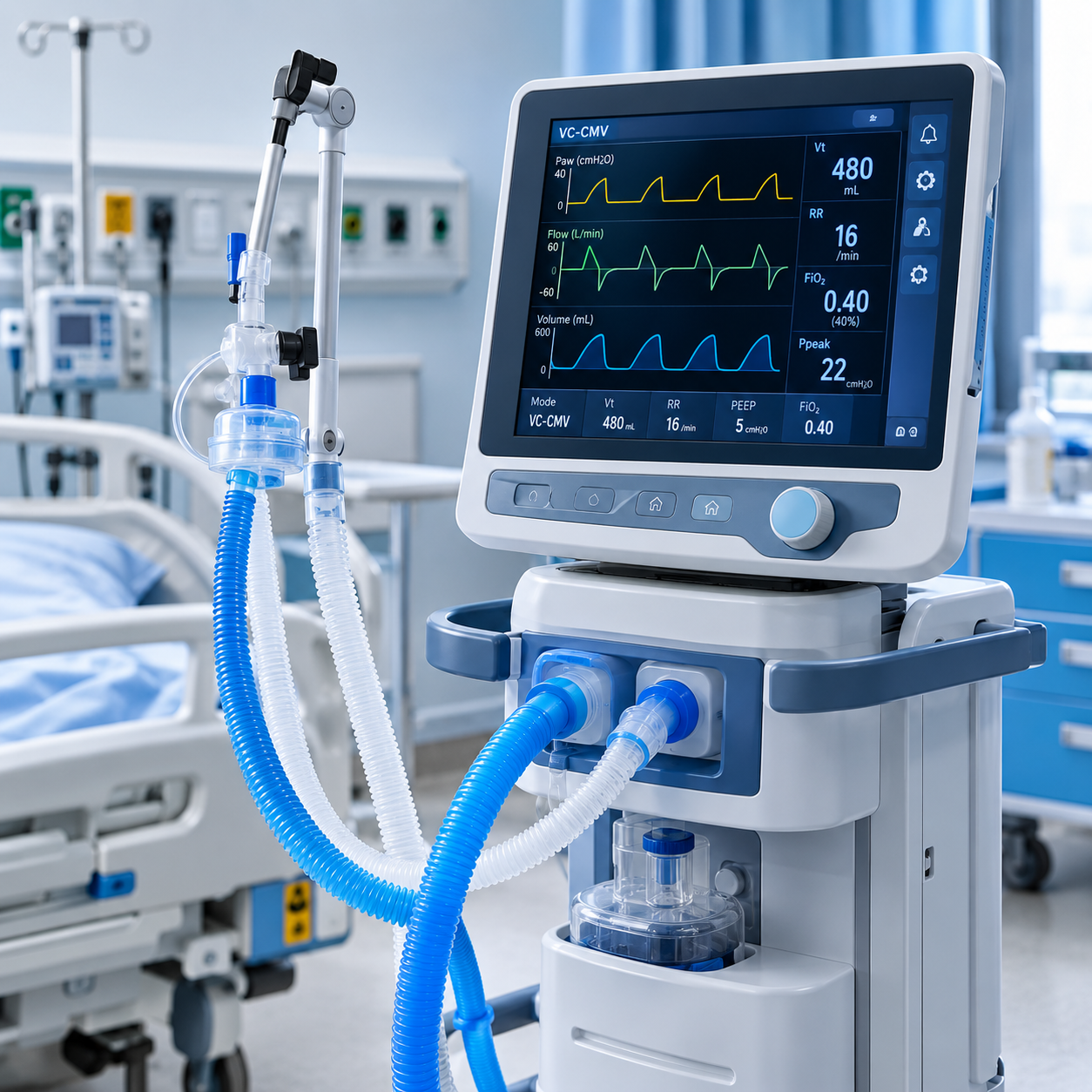
Main Components of a Ventilator
Ventilator components vary depending on the manufacturer and model, but most modern ventilators include several essential components, such as:
Control Unit:
Allows the medical team to set and monitor the device’s parameters.
Breathing Circuit:
Transfers air and gases between the ventilator and the patient.
Patient Interface:
May be a mask or breathing tube, depending on the type of ventilation and the patient’s condition.
Display Screen:
Shows various data and parameters related to the patient’s breathing.
Alarm Systems:
Alert the medical team when changes or problems occur that require attention.
Types of Ventilators
There are several types of ventilators, which differ in design, features, and intended applications.
Some of the main types include:
Intensive Care Ventilators
These ventilators provide advanced capabilities for controlling ventilation and monitoring the patient’s condition. They are primarily used in intensive care units and for critically ill patients.
Ventilators Used During Anesthesia
These are integrated into anesthesia machines used in operating rooms and help control the patient’s breathing during surgery.
Non-Invasive Ventilators
These ventilators can be used in certain cases without the need to insert a tube into the trachea. Respiratory support is provided through an appropriate mask.
Key Features to Look for When Choosing a Ventilator
When equipping hospitals or intensive care units, several factors should be considered when selecting a ventilator, including:
- Ease of use and control.
- Clear and easy-to-read display.
- Variety of available ventilation modes.
- Accuracy of monitoring and alarm systems.
- Ability to be used with different patient populations.
- Appropriate safety systems.
- Availability of maintenance and spare parts.
- Proper training for medical staff.
- Compatibility with the requirements of the medical department where the device will be used.
Importance of Regular Ventilator Maintenance
Regular maintenance is an essential part of managing ventilators in hospitals. Following the manufacturer’s maintenance guidelines and approved maintenance schedules helps maintain the device’s performance and identify technical problems at an early stage.
It is also important to clean and disinfect reusable components according to the manufacturer’s instructions and the healthcare facility’s approved infection-control policies.
The Role of the Medical Team in Using a Ventilator
A ventilator does not operate independently of the medical team. Its use requires continuous assessment of the patient’s condition, monitoring of vital signs, and evaluation of the patient’s response to treatment.
Physicians, respiratory therapists, and trained nurses monitor both the patient and the ventilator and make the necessary adjustments according to the treatment plan.
Conclusion
A ventilator is one of the essential medical devices in modern hospitals, particularly in intensive care units, emergency departments, and operating rooms. It helps provide respiratory support to patients who are unable to breathe adequately on their own.
Safe and effective use of a ventilator depends on selecting the appropriate equipment, operation by qualified medical professionals, regular maintenance, and compliance with the manufacturer’s instructions and the healthcare facility’s medical policies.
Artificial Respirator
Home – Products
Artificial Respirator
- M.B
Ventilator: Importance and Uses in Hospitals
A ventilator is one of the most important medical devices used in hospitals and intensive care units. It plays a vital role in assisting patients who have difficulty breathing or are unable to obtain sufficient oxygen naturally.
A ventilator supports the breathing process by delivering air and oxygen to the lungs and removing carbon dioxide, according to settings determined and monitored by the medical team based on the patient’s condition.
What Is a Ventilator?
A ventilator is a medical device designed to assist patients with breathing when the lungs are unable to provide the body with enough oxygen or remove sufficient amounts of carbon dioxide.
The device can be used for short or extended periods, depending on the patient’s medical condition. In some cases, it may be connected to the patient through a breathing mask, while in more advanced cases, it may be connected through a breathing tube inserted into the trachea.
Importance of Ventilators in Hospitals
The importance of ventilators is particularly evident in intensive care units, emergency departments, and operating rooms, where some patients may require continuous or temporary respiratory support.
Some of their main functions include:
- Assisting patients who suffer from respiratory failure or impaired respiratory function.
- Supporting breathing during certain surgical procedures under general anesthesia.
- Helping maintain appropriate oxygen levels in the blood.
- Helping remove carbon dioxide from the body.
- Providing respiratory support to patients with certain lung diseases or critical conditions.
- Monitoring various respiratory parameters and adjusting respiratory support according to the patient’s condition.
When Does a Patient Need a Ventilator?
Not every patient experiencing breathing difficulties requires mechanical ventilation. The decision to use a ventilator is made by the physician and medical team based on an assessment of the patient’s condition, test results, respiratory parameters, and oxygen levels.
A ventilator may be used in situations such as:
1. Respiratory Failure
When the lungs are unable to provide sufficient oxygen or remove enough carbon dioxide, the patient may require respiratory support using a ventilator.
2. During Surgical Procedures
Ventilators can be used during general anesthesia to help the patient breathe throughout the procedure, according to the settings determined by the anesthesiologist.
3. Critical Conditions
Ventilators are widely used in intensive care units for patients who require continuous respiratory support due to serious medical conditions.
4. Certain Lung Diseases
Some patients with severe lung diseases may require respiratory support for a specific period, depending on the physician’s assessment.
How Does a Ventilator Work?
A ventilator delivers a mixture of air and oxygen to the patient according to a specific breathing pattern and set of ventilation parameters.
The medical team can control several settings, including:
- The volume of air delivered to the patient.
- Respiratory rate.
- Airway pressure.
- The oxygen concentration in the inspired air.
- The timing of inhalation and exhalation.
- The ventilation mode appropriate for the patient’s condition.
The appropriate settings vary from one patient to another. Therefore, the device should be operated and adjusted by trained medical professionals.
Main Components of a Ventilator
Ventilator components vary depending on the manufacturer and model, but most modern ventilators include several essential components, such as:
Control Unit:
Allows the medical team to set and monitor the device’s parameters.
Breathing Circuit:
Transfers air and gases between the ventilator and the patient.
Patient Interface:
May be a mask or breathing tube, depending on the type of ventilation and the patient’s condition.
Display Screen:
Shows various data and parameters related to the patient’s breathing.
Alarm Systems:
Alert the medical team when changes or problems occur that require attention.
Types of Ventilators
There are several types of ventilators, which differ in design, features, and intended applications.
Some of the main types include:
Intensive Care Ventilators
These ventilators provide advanced capabilities for controlling ventilation and monitoring the patient’s condition. They are primarily used in intensive care units and for critically ill patients.
Ventilators Used During Anesthesia
These are integrated into anesthesia machines used in operating rooms and help control the patient’s breathing during surgery.
Non-Invasive Ventilators
These ventilators can be used in certain cases without the need to insert a tube into the trachea. Respiratory support is provided through an appropriate mask.
Key Features to Look for When Choosing a Ventilator
When equipping hospitals or intensive care units, several factors should be considered when selecting a ventilator, including:
- Ease of use and control.
- Clear and easy-to-read display.
- Variety of available ventilation modes.
- Accuracy of monitoring and alarm systems.
- Ability to be used with different patient populations.
- Appropriate safety systems.
- Availability of maintenance and spare parts.
- Proper training for medical staff.
- Compatibility with the requirements of the medical department where the device will be used.
Importance of Regular Ventilator Maintenance
Regular maintenance is an essential part of managing ventilators in hospitals. Following the manufacturer’s maintenance guidelines and approved maintenance schedules helps maintain the device’s performance and identify technical problems at an early stage.
It is also important to clean and disinfect reusable components according to the manufacturer’s instructions and the healthcare facility’s approved infection-control policies.
The Role of the Medical Team in Using a Ventilator
A ventilator does not operate independently of the medical team. Its use requires continuous assessment of the patient’s condition, monitoring of vital signs, and evaluation of the patient’s response to treatment.
Physicians, respiratory therapists, and trained nurses monitor both the patient and the ventilator and make the necessary adjustments according to the treatment plan.
Conclusion
A ventilator is one of the essential medical devices in modern hospitals, particularly in intensive care units, emergency departments, and operating rooms. It helps provide respiratory support to patients who are unable to breathe adequately on their own.
Safe and effective use of a ventilator depends on selecting the appropriate equipment, operation by qualified medical professionals, regular maintenance, and compliance with the manufacturer’s instructions and the healthcare facility’s medical policies.